Posts

Showing posts with the label environmental pollutants

Plastic Pollution: Environmental Health Of Workers Affected By Pollutant

Image
A new study in environmental science has revealed that workers in the industrial sector who use Bisphenol A or BPA in their manufacturing process may likely have up to 70 times the amount of this environmental pollutant in their bodies when compared to the average individual.  This environmental pollution from BPA has impacted negatively on reproduction and fertility. Studies even show that industrial BPA pollution in some worker were as much as a 1000 times higher than general household BPA exposure. The study which is the first to look into the exposure to BPA in the manufacturing industry discovered that most workers had high levels of the plastic pollutant which has been shown to affect environmental health by disrupting hormonal activities in the body just after a few days of exposure.   It has been suggested by environmental health and safety experts that this industrial level exposure to BPA may have a potentially fatal effect on reproductive health and fe...

Air Pollution: Environmental Pollutant Linked To Mental Diseases

Image
Air pollution has become a major global health challenge. Studies have placed deaths resulting from air pollution above that caused by malaria and HIV/AIDS put together . Although air pollutants have been linked with lung and heart diseases, there are new evidences that air pollution may be associated with degenerative brain diseases like cognitive disorder, mental illness and Alzheimer's disease.

Pollution in the Huai River and the cancer village of Huangmengying in Henan, China | EJAtlas

Image
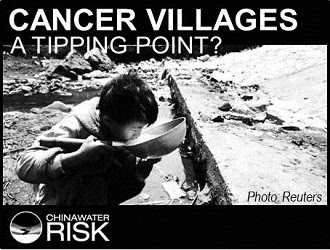
Pollution in the Huai River and the cancer village of Huangmengying in Henan, China | EJAtlas : "In 2013, researchers from China Center for Disease Control and Prevention (CCDCP) confirmed a correlation between heavily polluted water and higher incidences of cancer in the Huai River watershed in eastern China. The Huai River is one of China’s major river systems with coverage of 274,700 square kilometres in Henan, Anhui and Jiangsu Provinces, watering much of China’s commercial grain crops. During the 1980s, polluting factories such as food processing factories, paper mills and tanneries were set up along the riverbank of both the Huai River and its tributaries, causing severe pollution to the nearby villages. Since 1990s, a large number of cancer villages have been found in the Huai River watershed, among which, the village of Huangengying is one of the first widely known cases.

India’s Air Pollution Rivals China’s as World’s Deadliest - The New York Times

Image
India’s Air Pollution Rivals China’s as World’s Deadliest - The New York Times : NEW DELHI — India’s rapidly worsening air pollution is causing about 1.1 million people to die prematurely each year and is now surpassing China’s as the deadliest in the world, a new study of global air pollution shows. The number of premature deaths in China caused by dangerous air particles, known as PM2.5, has stabilized globally in recent years but has risen sharply in India, according to the report, issued jointly on Tuesday by the Health Effects Institute, a Boston research institute focused on the health impacts of air pollution, and the Institute of Health Metrics and Evaluation, a population health research center in Seattle.

Wood Smoke: Environmental Pollution and Its Health Implications

Image
It is wrong to assume that wood smoke is harmless . Smoke from wood stoves, fireplaces, burn fires and so on form a major part in air pollution problems. This is because wood smoke contains particles and gases that have the potential of causing serious health problems when they are breathed. These gases contain toxic chemicals that can irritate the respiratory track and may even cause cancer. In environments where wood is burned, they are bound to be higher levels of indoor smoke and more environmental pollutants in form of particles and gases. Also, smoke from wood stoves can seep into houses where wood stoves are not used.

Air Pollution: Environmental Pollutant Linked To Neural Tube Defects

Image
Benzene is a colorless , flammable liquid with a sweet odor. It evaporates quickly when exposed to air. Benzene is formed from natural processes, such as volcanoes and forest fires, but most exposure to benzene results from human activities. The most important source of exposure to  benzene is mainstream smoke from cigarettes , which accounts for about 50% of population burden of exposure. It is also used mainly as a starting material in making other chemicals, including plastics, lubricants, rubbers, dyes, detergents, drugs, and pesticides. In the past it was also commonly used as an industrial solvent (a substance that can dissolve or extract other substances) and as a gasoline additive, but these uses have been greatly reduced in recent decades . Environmental tobacco smoke or secondhand smoke is an important source, accounting for about 5% of total nationwide exposure.

Environmental Studies Link Plastic Pollutant To Infertility

Image
One of the most challenging aspects of being a wom an is having to cop e with infertility. This is because being fertile, as a woman, not only satisfies the emotional desire a woman has for creating a life, but a lso a very deep physical and biological urge . It is very important for women to pay attention to their bodies in pursuing health and pregnancy, especially to scientists' warming over environmental exposure to toxic pollutants and chemicals. Fertility experts now believe that is better to avoid environmental pollution from toxic chemicals in our homes than to do sign up for body cleansing procedures. Where we live, the foods we eat, and the contact we make with various household products have unbelievable influence in our health and well-being.

Lead Pollution: The #1 Childhood Environmental Health Threat Globally

Image
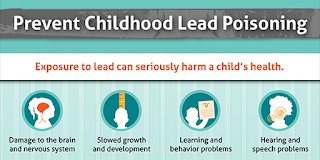
Fact Sheet: What is the #1 Childhood Environmental Health Threat Globally? - The Pollution BlogThe Pollution Blog : "“ Lead Poisoning from improper automotive battery recycling activities is the number one childhood environmental health threat globally”.—  Dr. Jack Caravanos, CUNY professor and research lead at Blacksmith Institute for a Pure Earth

Health Implications Of Environmental Mercury Pollution

Image
Mercury is r anked as one of   the most toxic elements or substances   in the world, coming just behind   arsenic and   lead   as third.   This environmental pollutant  continues to be dumped into our waterways   and soil,   is being   spilled into our atmosphere, and co ntinually contaminates   our food and water . Although mercury pollution was initially minimal, h uman activities have nearly tripled the amount of mercury in the   environment   and the atmospheric burden is increasing 1.5 percent per ye a r . Environmental mercury, either through soil or water pollution,   can   enter the food chain through plant and livestock. Once in the food chain mercury can   bioaccumulate causing   harmful   effects to human health .

Environmental Pollution Implicated in Parkinson's Disease And Nervous Disorders

Image
Neurotoxicity is as a result of the long term exposure to toxic pollutants , called neurotoxins, which badly affects the central nervous system, or sensory organs. Neurotoxins are chemicals with the ability to damage the nervous system. They do this by destroying the cells that transmit and process signals in the brain . As pollutants, neurotoxins are ever-present in the environment; in schools, homes, road an so on. They are the major sources of environmentalpollution in occupational settings. Production processes in factories are a major environmental pollution source of some of the most harmful neurotoxi ns . Clinical manifestations of n eurotoxicity occur in multiple syndromes and effects, in relation to the nature, level and duration of the exposure. Below are some commonly use chemicals present in the environment that cause central nervous disorders. Their clinical manifestations are identified in this article as well as their relation with toxic exposures . Also preci...

Water Pollution: Drinking Polluted Water Also Likely To Cause Cervical Cancer

Image
It is no longer news that o ne of the leading causes of premature death, to this day, is cancer. And sadly enough, there is still no cure this threat to human health . Furthermore , while there are many environmental factors that are suspected to cause cancer, there are no absolute answer as to what actually causes cancer . How ever, what is certain is how  cancer develops i n the body . The human body is made up of numerous amounts of cells that work every second to ensure optimum efficiency and health . W hen a change (external or internal) in the activities of these cells,  it could damage one of the cell's DNA. This is how cancerous cell s are formed and they begin to spread through the body.

Health Effects Of Environmental Exposure To Aluminum Pollution

Image
Aluminum has been for quite some time known to be neurotoxic, with mounting proof that its long term environmental exposure is a linked to numerous neurological diseases, including dementia, a mental imbalance, and Parkinson's disease. Nonetheless, research validation is hard to establish due to the absence of longitudinal studies, as well as push back from industries that use aluminum in their products. Regardless of the deficiency of conclusive reviews, mounting scientific proof practically rules out the uncertainty of its toxicity. A valid example is scientific investigation from Keele University in the UK which unequivocally indicates large amounts of aluminum in the brain of an individual exposed to aluminum at work, who later died from Alzheimer's disease. While aluminum exposure has been involved in Alzheimer's and various other neurological diseases, this case happens to be "the main direct connection" between Alzheimer's disease and elevated...

Environmental Pollutant in Plastic Likely To Cause Prostate Cancer

Image
The prostate gland, which develops in human males when they are fetuses, is to a great degree sensitive to estrogen. Thus, scientists have long ago speculated that prostate cancer could increase in men as a result of their interactions with estrogen-like chemicals in the womb. Unlike other cancer-causing chemicals that can bring about significant harm to DNA, Bisphenol-A or BPAappears to exact unobtrusive changes that are passed from one generation ontothe next.