Posts

Showing posts with the label agricultural systems

Malnutrition Linked To Air Pollution and Ozone Depletion

Image
The world will require 50 percent more nourishment by 2050 because of both an expanding populace and a move toward a more Westernized eating routine in creating nations. In any case, as our requirement for nourishment rises, our capacity to deliver that sustenance might be brought down by atmosphere and air quality changes, concurring a to a review simply distributed in Nature Climate Change. Environmental scientists from MIT and Colorado State University found that if everything else remains as it is today, by 2050 global warming may lessen world harvest yields by around 10 percent. Be that as it may, world harvest yields confront a greater number of difficulties than simply rising temperatures. Ozone pollution likewise harms crops , while being harder to evaluate. A few products are harmed most by outrageous temperature swings, others more by ozone. "Ozone pollution can likewise be dubious to recognize since its harm can look like other plant diseases, creating bits on ...
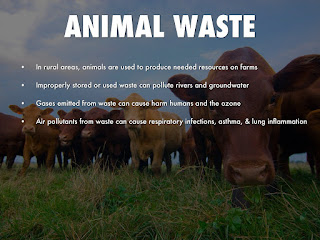
Air And Water Pollution: Impact Of Animal Farming on The Environment

Image
Environmental impact of animal production : "Each one of us has an impact on the environment and the world in which we live. Growing food and raising animals also uses resources from the earth. Humans impact the environment through deforestation, agricultural and livestock activities, urbanization and burning fossil fuels. Each and every living creature produces greenhouse gases (GHG). Greenhouse gases are gases in the earth’s atmosphere and can be produced in nature and through human industry. An increased amount of GHG generates high temperatures on earth. The most abundant GHG are water vapor, carbon dioxide, methane, nitrous oxide and ozone. The amount of GHG that agriculture and farming produces around the world is different. This is because each livestock production system is different in the way it uses resources. Agricultural systems are often categorized into two types of systems: extensive farming and intensive farming.